
New chapter on drivers of the exceptional biodiversity of Anatolia
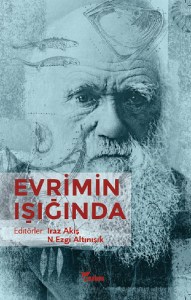 A book chapter by our lab PI Çağatay Tavşanoğlu has been published in the book entitled “Evrimin Işığında” [In the Light of Evolution]: Tavşanoğlu, Ç. (2016) Anadolu’nun yüksek biyoçeşitliliği: Evrim bunun neresinde? [High biodiversity of Anatolia: the role of evolution] In: Akış, I., Altınışık, N.E. (Eds.) Evrimin Işığında [In the Light of Evolution], Yazılama Yayınevi, İstanbul, Turkey, pp. 207-225.
The book has been published in Turkish, and the chapter is about the drivers of the exceptional biodiversity of the Anatolian Peninsula. The chapter summarizes the biodiversity of Anatolia briefly and then explains drivers of this exceptional biodiversity for a temperate region country with long-term and recent climatic and geological processes.
The conclusion of the chapter is that the unique regional location of and the huge topographic and climatic diversity inside the Peninsula make Anatolia a gathering center, a diversification center and an ice age refugium for various taxa, which is responsible for the currently observed biodiversity.
The book is an outcome of the 4th and 5th Evrim, Bilim ve Eğitim Sempozyumu [Evolution, Science, and Education Symposium] that were held in İstanbul, Turkey in 2013 and 2015, respectively. The chapter by Çağatay Tavşanoğlu had already been presented in the 4th one.
The book is available from many bookstores in Turkey, but also from the Internet sales.
You can read the chapter from here: [pdf]
EEBST2016 was held at Hacettepe University
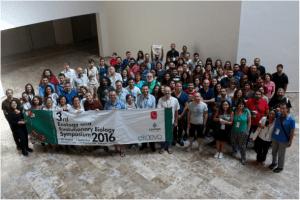 3rd Ecology and Evolutionary Biology Symposium, a scientific symposium organized annually by Ecology and Evolutionary Biology Society of Turkey, was held at Hacettepe University between 31 August and 1 September 2016.
Many lab members actively played a role in the organization, and the symposium was a success with 115 participants from nine countries. For more information about EEBST2016, please visit the symposium website: http://www.eebst2016.net/
“Why we should let raging wildfires burn” by Claire Asher
 A recent story in BBC Earth was about the ecology of wildfires. Claire Asher, a freelance science writer, asked many exciting questions about wildfires in her feature article which had been answered by some experts on the field, including our lab PI, Çağatay Tavşanoğlu.
Subheading of the article actually summarizes the main topic of the story: “Humans often fight hard to control wildfires, but many ecosystems need destructive flames to function properly“, but more topics related to fire ecology such as fire regimes, fire adaptations, and post-fire recovery of vegetation can be found within the text of the article.
To read the full article click here.
Photo credit: BBC Earth
İsmail successfully defended his MSc thesis
İsmail Bekar, our lab member, successfully defended his MSc thesis after a pleasant presentation in Department of Biology at Hacettepe University on 24 June 2016. For his thesis, he studied on the relative role of anthropogenic and natural drivers in shaping recent fire regimes in Mediterranean ecosystems of Turkey using satellite fire data from NASA and a modeling approach.
From now on, he is leaving our lab as he has succeeded to get a scholarship from Swiss government to continue his studies on fire modeling at ETH Zurich. Congratulations!
New paper: Fire-related germination and seedling growth in Central Anatolian steppe
Our paper on fire-related germination and seedling growth in Central Anatolian steppe has been published in Journal of Arid Environments: [Tavşanoğlu, Ç., Çatav, Ş.S., Özüdoğru, B. (2015) Fire-related germination and early seedling growth in 21 herbaceous species in Central Anatolian steppe. Journal of Arid Environments 122: 109-116]. In this paper, we examined the germination and early seedling growth of 21 herbaceous species in Central Anatolian steppe vegetation in relation to fire cues (heat shock and smoke).
Seeds of all studied species were able to tolerate low heat shocks but moderate and high heat shocks had a negative impact on germination and seedling growth. In Stachys byzantina (Lamiaceae), germination was stimulated by the smoke treatment. Smoke and low heat shocks positively affected the seedling vigor index of six taxa: Diplotaxis tenuifolia (Brassicaceae), Reseda lutea (Resedaceae) in low heat shock treatments; Crepis foetida ssp. rhoedafolia, Crupina crupinastrum (Asteraceae), Daucus carota (Apiaceae) and Sanguisorba minor (Rosaceae) in the smoke treatment.
The results suggest that the seeds of plant species in Central Anatolian steppes are resistant to low-intensity surface fires, but not high-intensity crown fires and that some species take advantage from surface fires. Our results contribute to understanding the role of fire in temperate grassland ecosystems, relatively less studied ecosystem type in relation to fire worldwide. Moreover, our study is the first one conducted in biodiversity-rich Anatolian steppe ecosystems with a fire ecology perspective.
Elif successfully defended her MSc thesis
Elif Deniz Ülker, our lab member, successfully defended her MSc thesis after an impressive presentation in Department of Biology at Hacettepe University on 10th June 2015. Her MSc study was about the effect of the Late Quaternary climate changes on the geographic distribution in Quercus robur (Pedunculate oak) and was supervised by Çağatay Tavşanoğlu and Utku Perktaş.
Ecology and Evolutionary Symposium Turkey 2015: registration open
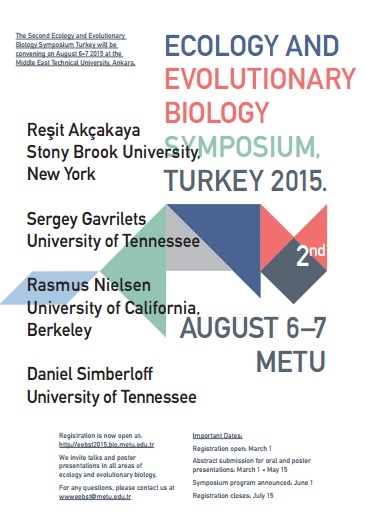 The 2nd Ecology and Evolutionary Biology Symposium Turkey 2015 will be convening on August 6-7 2015 at METU, Ankara. Talks and poster presentations in all areas of evolutionary biology and ecology will be welcome. Presentations will be in English, and the Symposium will be open to international participation.
Resit Akcakaya (Stony Brook University), Sergey Gavrilets (University of Tennessee), Rasmus Nielsen (University of California, Berkeley), and Daniel Simberloff (University of Tennessee) are keynote speakers of the Symposium.
More information can be found at http://eebst2015.bio.metu.edu.tr/Home.html.
The deadline for abstract submissions is May 15 while the registration closes on July 15.
The Workshop on Genomic Methods in Ecology and Evolution
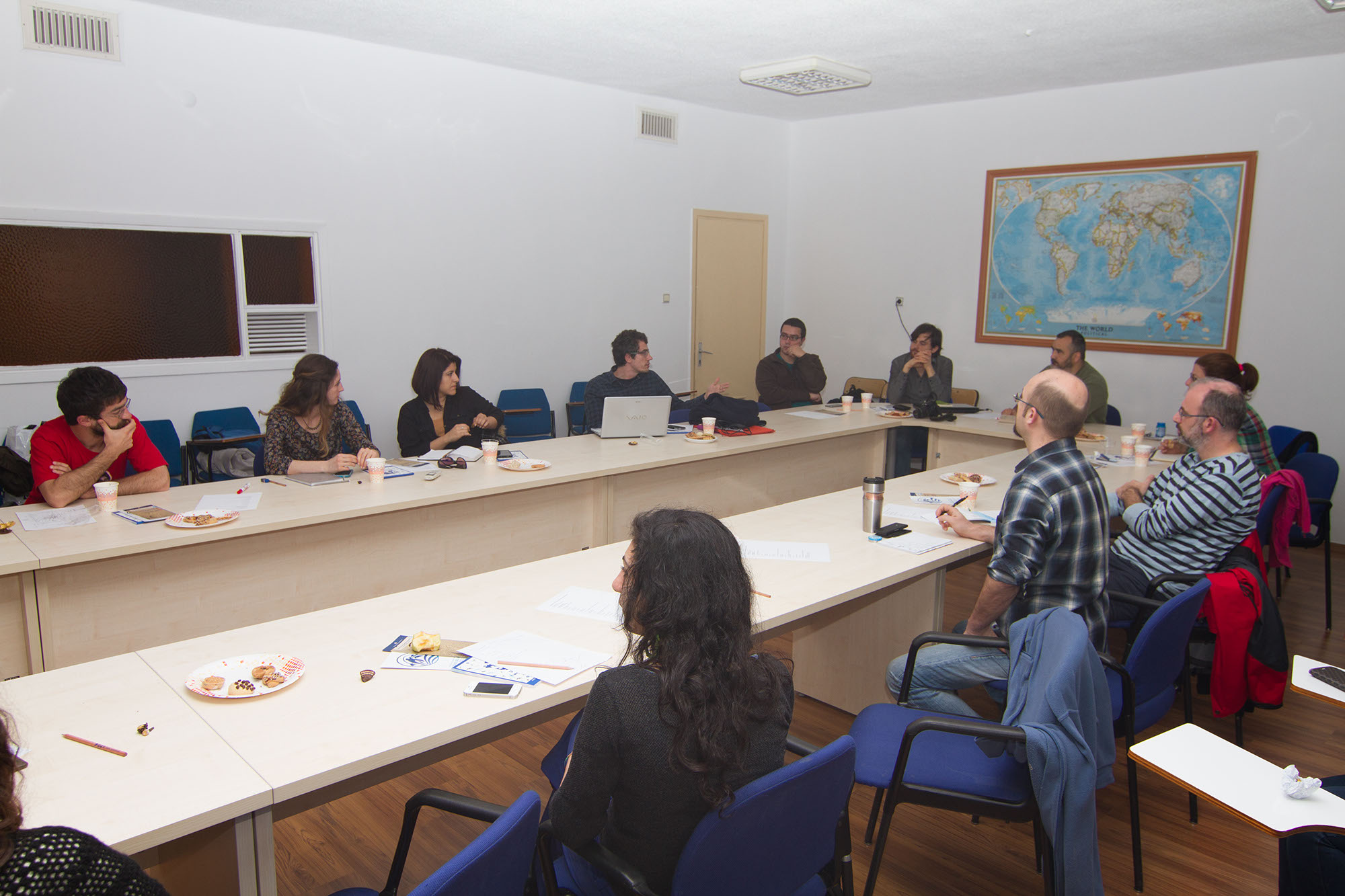 Three of our lab members, Çağatay, Deniz, and Elif participated in the Workshop on Genomic Methods in Ecology and Evolution, held on 7-8 Feb. 2015 in Mersin, Turkey.
The workshop organized by the Institute of Marine Sciences, Middle East Technical University, Mersin, and by the members of the Ecology and Evolution Network of Turkey. (more…)
FESP 2009 was held in Marmaris, Turkey
2nd International Meeting of Fire Effects on Soil Properties (FESP 2009) was held in Marmaris, Turkey by our team on 11-15 February 2009.
A total of 70 participants from 9 countries met to discuss the recent advances in the research of soil-fire relationships in Marmaris. During the first three days, 3 invited, 30 oral and 35 poster contributions were presented at the Meeting. The last day included a short trip to Pamukkale, Turkey.
A special section (edited by Ç. Tavşanoğlu and X. Úbeda) in the scientific journal Environmental Research was published, including a guest editorial and following six contributions in which presented at the Meeting.
You can access the abstract book following this link.
Schedule
- 13-16/05/2026 12th International Ecology Symposium, Gaziantep, Türkiye
- 22-26/06/2026 68th IAVS Annual Symposium, Gijon, Spain
- 07/2026 12th Ecology and Evolutionary Biology Symposium (EEBST2026), Mersin, Türkiye
- 20-24/07/2026 21st Eurasian Grassland Conference, Sofia, Bulgaria
- 24-26/08/2026 15th European Conference on Ecological Restoration, Brest, France
- 31/08 – 06/09/2026 Philosophy of Biology Summer Camp, Şirince, İzmir, Türkiye
- 31/10 – 06/11/2026 10th International Conference on Forest Fire Research, Coimbra, Portugal
- ?2027 7th International Conference on Mediterranean Pines (MEDPINE 7), Türkiye
 Functional Ecology Lab