
The Turkish Translation of C.J. Krebs’ Ecology Book
The release of the Turkish translation of C.J. Krebs’ renowned book on ecology1 is a significant milestone. This project has been a labor of love and dedication, involving a team of ecologists deeply committed to making this essential work accessible to Turkish readers.
Our lab PI, Çağatay, was also a member of the translation team alongside many esteemed colleagues, most of whom are members of the Ecology and Evolutionary Biology Society of Turkey (https://www.ekoevo.org/). Their collaboration was characterized by intense discussions and meticulous attention to detail, particularly concerning the Turkish equivalents of ecological terms. These discussions ensured that the translation not only remained true to the original text but also aligned with the Turkish scientific community.

The translation process was challenging yet immensely rewarding. The aim was to preserve the integrity and clarity of Krebs’ writing while making it comprehensible and relevant to Turkish-speaking ecologists and students. Every term and concept was carefully considered and debated to ensure the highest quality translation.
This Turkish edition of C.J. Krebs’ Ecology2 is highly recommended for those interested in ecology, whether students or researchers. It is a valuable resource that offers comprehensive insights into ecological principles and practices. The team’s hard work and dedication are evident on every page, and it is hoped that it will inspire and educate a new generation of Turkish ecologists. This translation is expected to contribute significantly to the growing body of ecological knowledge in Turkey.
EEBST 2023
We attended the Ecology and Evolutionary Biology Symposium (EEBST), held at Istanbul University, Istanbul, Türkiye, between 17 and 19 July 2023 (https://eebst.ekoevo.org/eebst-2023/).
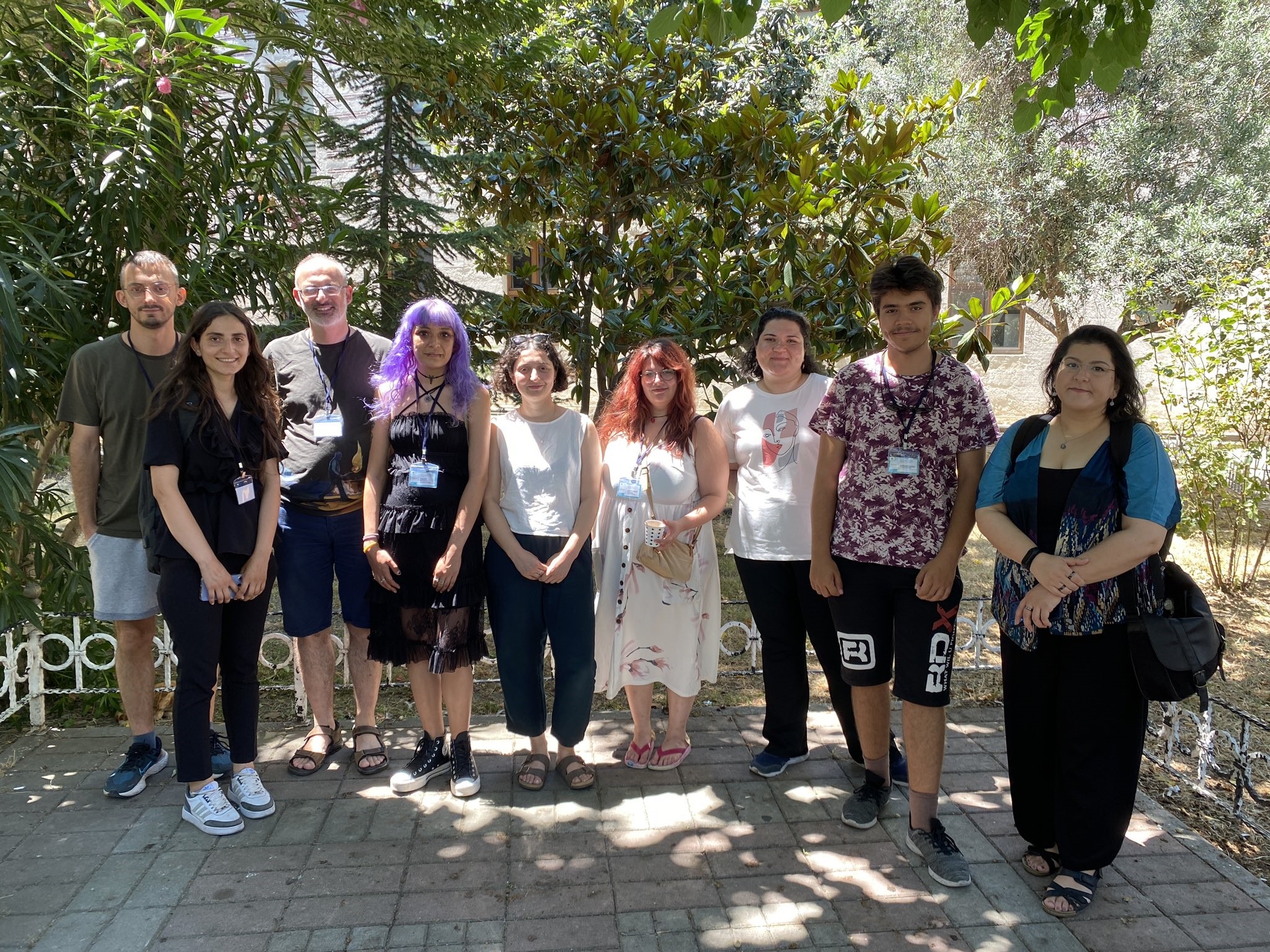
Our alumni, D. Deniz Kazancı, presented her oral presentation titled “Drivers of among-population variability in fire-related traits in Turkish Red Pine (Pinus brutia Ten.)“, a presentation related to her Ph.D. thesis. We also had three posters by Çağatay Tavşanoğlu (“Comparison of flammability in two serotinous Mediterranean trees“), Mina Cansu Karaer (“In search of mountain gazelles: Examining diet, gastrointestinal parasites, and stress hormones“), and Esra Bayşahan (“Germination responses to incubation temperature in four herbaceous plants at low and high elevations in a Mediterranean mountain“).
EEBST has been held by the Ecology and Evolutionary Biology Society (Türkiye) since 2014 every year. The next EEBST will be in Çanakkale, Türkiye in July 2024.
Here is the link for the abstract book of the symposium: https://eebst.ekoevo.org/wp-content/uploads/2024/06/Abstract_Book.pdf
Lab visit by Rafael Bernardi
Last month, our lab had the pleasure of hosting Rafael Bernardi, a researcher from Uruguay. Rafael’s visit was an exciting and enriching experience for all of us, providing numerous opportunities to discuss projects, research papers, and potential new collaborations.
During his visit, Rafael delivered an insightful seminar on the impacts of fire and grazing on tropical forests and grasslands. This seminar, titled “How fire and livestock shape tree cover and influence forest-grassland transitions in subtropical and tropical ecosystems,” was held on November 8, 2022, at the Beytepe Campus of Hacettepe University. It attracted a significant audience and generated considerable interest.
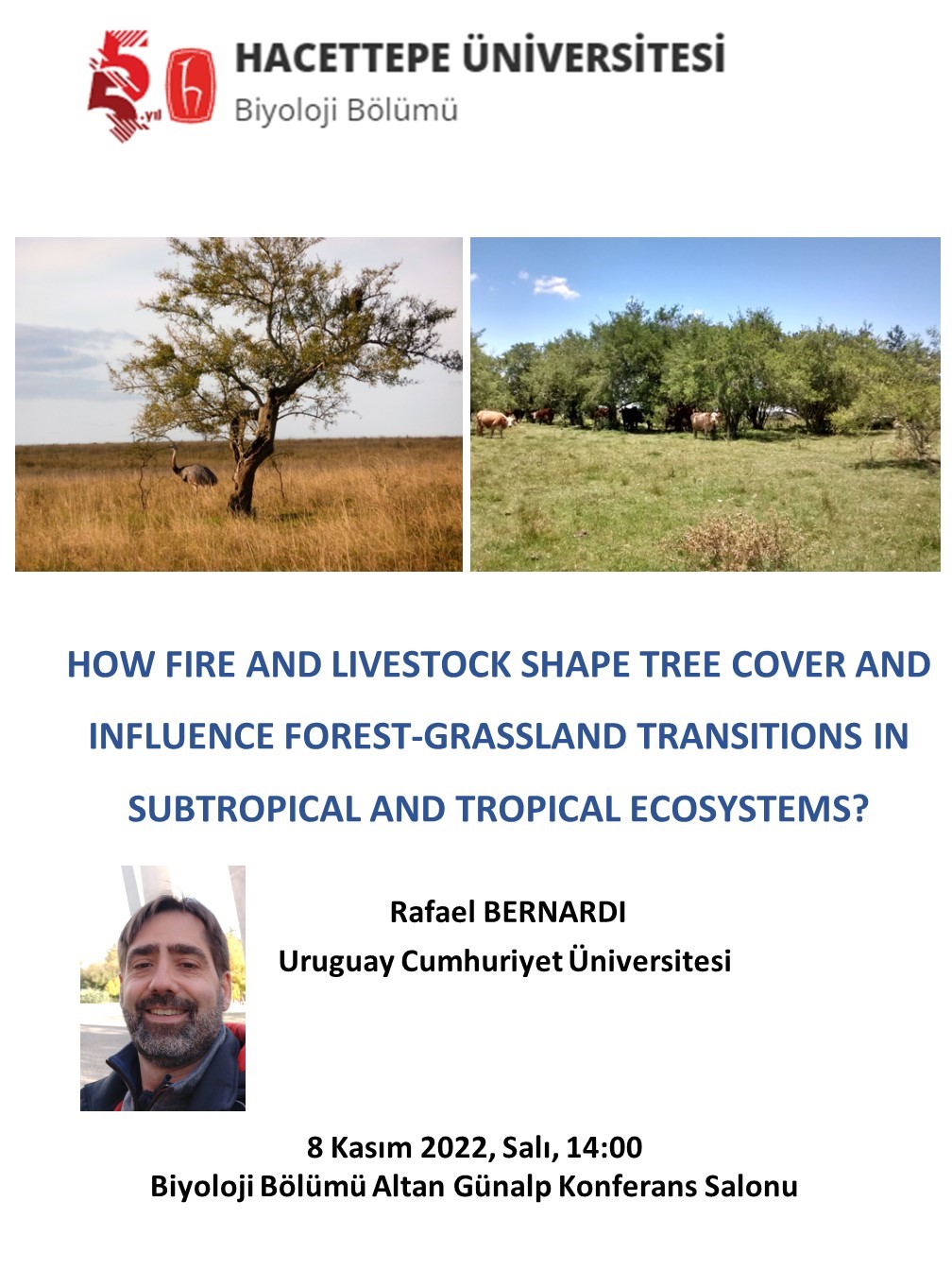
In addition to the seminar, Rafael actively participated in our lab activities. He joined our discussions on various research topics and offered valuable feedback on our current projects. Specifically, during field trips and discussions in the laboratory meetings, we had opportunities to develop a project regarding the drivers of woody vegetation in Central Anatolia, which we have already started to work on.
We anticipate more opportunities to collaborate on new projects to enhance our understanding of the drivers of woody cover in various ecosystems.
Seed Ecology VII
Recently, the 7th edition of the Seed Ecology Conference took place in Gijón/Xixón, Asturias, Spain, from September 6 to September 9, 2022. This prestigious event gathered seed scientists worldwide to discuss the latest research and advancements in seed ecology.

During this conference, our lab PI, Çağatay, presented the first results of our TÜBİTAK project on the possible physio-ecological effects of climate change on central Anatolian steppe plants in his presentation titled “Germination patterns under climate change in the plants of the Central Anatolian steppe“. This presentation highlighted our initial findings and shed light on how temperature, drought, and salinity impact the physiology and ecology of the plant species in this unexplored ecosystem.
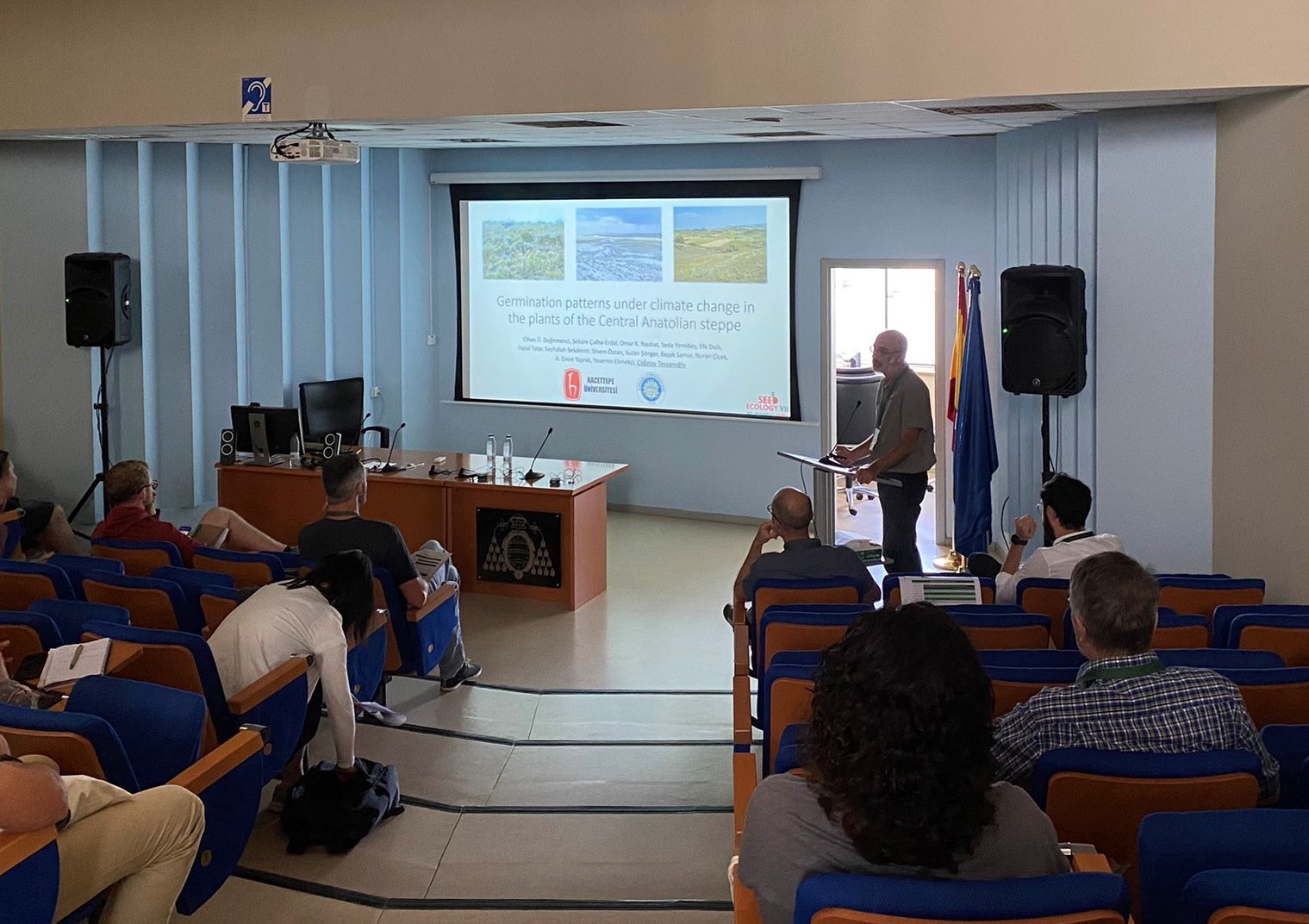
The conference proved highly productive, providing a platform for Çağatay to engage with fellow researchers and seed scientists. The exchange of ideas and insights during the event has sparked new research questions and potential avenues for future studies. Interacting with other experts in the field has opened up possibilities for collaboration on seed ecology.
We are looking forward to the next Seed Ecology conference planned to be held in Panama in 2025.
Elif is funded by TÜBİTAK for her research in the United States
Our lab member Elif will be in the United States to study with Paul Gugger in the University of Maryland for six months. She just got a Ph.D. level scholarship from TÜBİTAK, and she will study the genetic structure of oak (Quercus) species endemic to Turkey. This study will also be a part of her Ph.D. thesis.
Özlem and Anıl successfully defended their M.Sc. theses
Özlem Özüdoğru and Anıl Bahar, our lab members, successfully defended their M.Sc. theses.
Özlem’s thesis is about the effects of small-scale disturbance on a plant community in the central Anatolian steppe. She worked both in the field and lab, and her results are the first ones for biodiversity-rich Anatolian steppes. She is leaving our lab after completing her M.Sc. and will continue her professional life as a biology teacher.
Anıl worked on long-term Mediterranean vegetation dynamics using a modeling approach based on plant life-history traits and disturbance properties. In his thesis, he investigated the effects of fire frequency and initial vegetation coverage on these dynamics. Anıl is planning to stay in our lab to keep working on vegetation dynamics models.
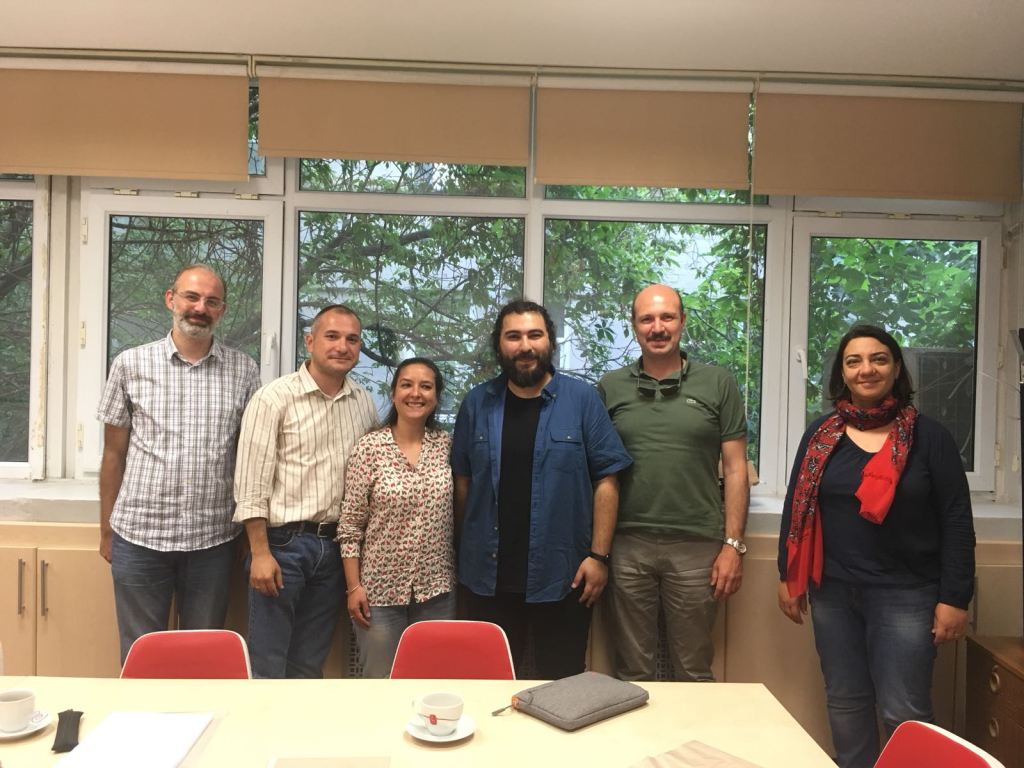
Juli Pausas’ visit to Turkey
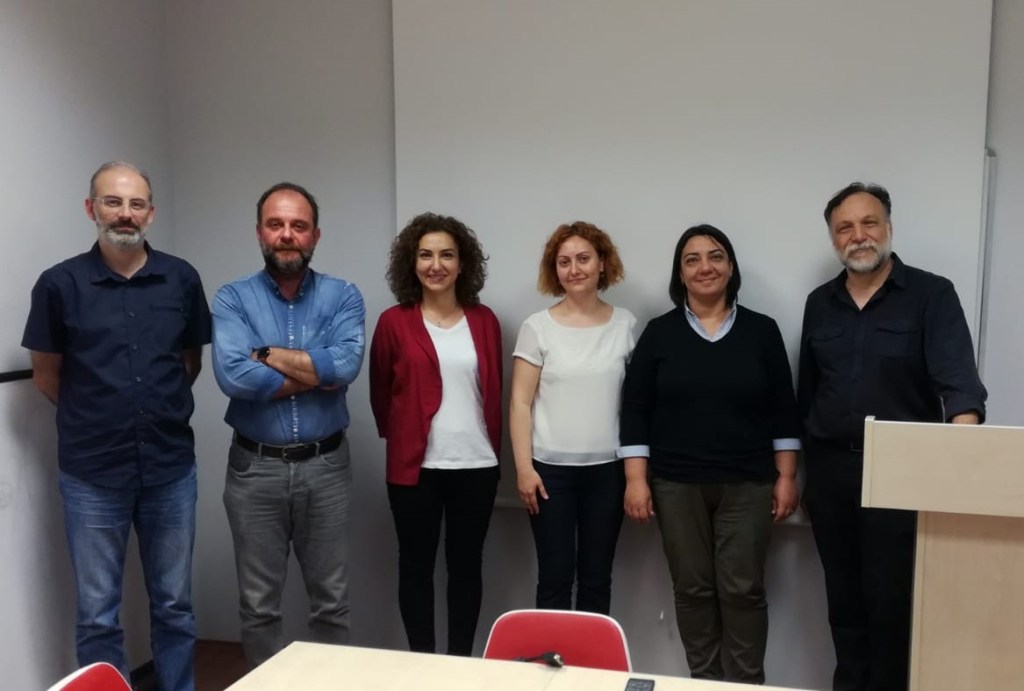
Last month (April 2017), the well-known fire ecologist Juli G. Pausas visited Turkey as our lab’s guest for more than a week. Our lab members were delighted by his visit, all of us had many opportunities to discuss projects, papers, and possible new collaborations.
During his visit, Juli gave a seminar on the relationship between wildfire and biodiversity in the Department of Biology at Hacettepe University, which draws interest as more than 80 audiences participated, and as with almost one hour of question-answer session.


He also joined the fire ecology postgraduate course of the department and discussed his papers with students. Our lab members also participated the discussion. The papers were selected by students, so they had opportunities to ask questions the author of the papers they had studied.
 One purpose of Juli’s visit was to discuss the methodology of our lab’s new project on fire-related traits of Turkish red pine (Pinus brutia). For this, we performed a field trip to Muğla Province in southwestern Turkey where many forests of this tree species are found. During this field trip, we had the opportunity to optimize the sampling design and the procedures of measuring fire-related traits such as serotiny, bark thickness, and self-pruning. You can also read his observations about the fire-related traits of P. brutia in his blog entry.
Gökhan successfully defended his M.Sc. thesis
 Gökhan Ergan, our lab member, successfully defended his M.Sc. thesis after his presentation to more than 80 people in Department of Biology at Hacettepe University on 1st March 2017. His thesis included four chapters on the relationship of Mediterranean plants with fire, including one field-based post-fire regeneration study, and three independent laboratory experiments on post-fire germination of Mediterranean plants.
From now on, he is leaving our lab as he founded an association to conduct ecological studies in the Aegean and Mediterranean regions of Turkey.
XIV MEDECOS Conference

XIV MEDECOS Conference & XIII AEET Meeting were held in Sevilla, Spain between 31 January and 4 February 2017. The conference was a huge and successful one with about 600 participants and more than 250 oral presentations.
Our lab PI Çağatay Tavşanoğlu attended the conference with an oral presentation titled “Resprouting ability encapsulates the most functional variability in the Mediterranean Basin flora” (Ç. Tavşanoğlu & Juli G. Pausas). Our former lab member, İsmail Bekar, also attended and he presented his M.Sc. study that was conducted in our lab (İ. Bekar & Ç. Tavşanoğlu, “The role of anthropogenic and natural factors in shaping recent fire regimes in Mediterranean ecosystems“).
MEDECOS is the International Mediterranean Ecosystems Conference, and AEET is Spanish Terrestrial Ecology Association. The next MEDECOS will be in South Africa in 2020.
For more information and the abstract book of the conference: http://www.medecos-aeet-meeting2017.es/
New paper: Multiple fire-related cues stimulate germination in Chaenorhinum rubrifolium (Plantaginaceae), a rare annual in the Mediterranean Basin
Our paper on fire-related germination in a rare annual plant species in Turkey has been published in Seed Science Research: [Tavşanoğlu, Ç., Ergan, G., Çatav, Ş.S., Zare, G., Küçükakyüz, K., Özüdoğru, B. (2017) Multiple fire-related cues stimulate germination in Chaenorhinum rubrifolium (Plantaginaceae), a rare annual in the Mediterranean Basin. Seed Science Research. doi:10.1017/S0960258516000283]. In this paper, we examined the effect of several fire-related cues (including heat shocks, smoke, and chemicals found in smoke) on the germination of Chaenorhinum rubrifolium, a rare Mediterranean annual.
The species was only found in a restricted area in a recently burned site in Ören, Muğla, Turkey, and this is the first record of this species for Turkish flora. This record will be a subject of a separate taxonomic paper (Zare et al., submitted). Our findings on the germination behavior of the species in relation to fire also support this field observation.
Among the fire-related cues that were tested in the study, smoke solutions, nitrate, karrikinolide (a compound found in smoke), and mandelonitrile (an analogue of cyanohydrins that are found in smoke) stimulated germination, with an increase from zero percentage (in the control) up to ~47% (in karrikinolide treatment). Although various heat shocks did not stimulate germination, the combination of heat shock and smoke treatments increased germination up to 43% in comparison to smoke treatment only (~19%). The highest percentage of germination achieved in the combined treatment of karrikinolide and mandelonitrile (~63%). All these maximum values were reached under photoperiod conditions, and the germination was limited under dark conditions. These findings suggest that several fire-related cues operate to stimulate germination in C. rubrifolium.
Annual species are important components of post-fire plant communities of the Mediterranean Basin, but less studies have been conducted in relation to their fire-related germination in comparison to perennial species. Moreover, the Mediterranean Basin has been underestimated with respect to the presence of the species with fire-related germination in comparison with other Mediterranean-type ecosystems. Therefore, our study suggests that much evidence has been overlooked by focusing on the germination of perennial, especially woody, species.
Finally, our results on karrikinolide and mandelonitrile are the first records of the stimulation of germination by smoke chemicals in a plant species in the Mediterranean Basin, and constitute one of the novel aspects of our study.
Another blog entry (by J.G. Pausas) related to our paper can be reached from this link: http://jgpausas.blogs.uv.es/2017/01/21/a-new-pyroendemic-annual-plant/
 Functional Ecology Lab